
 March 9, 2026
Ingredient Deep Dive: All About Feta
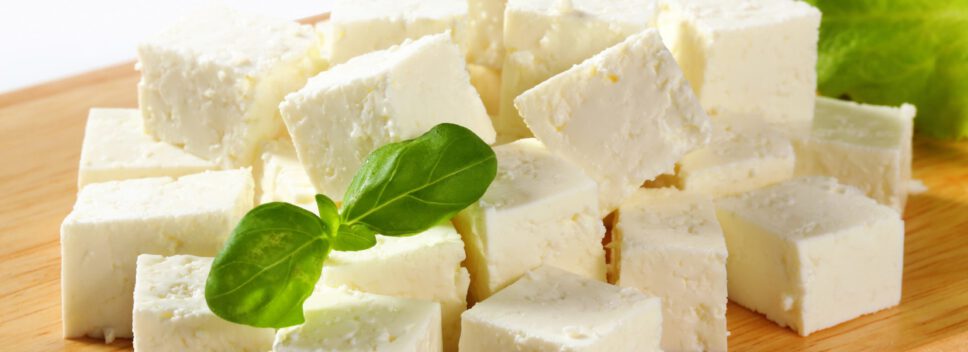
Feta is a popular cheese that brightens many Mediterranean dishes. Feta is a brined white cheese, usually made from sheep’s milk. Although sheep’s milk is most common, it can also be made from goat milk, or a mixture of the two.
Like most of the flavorful ingredients that make up Mediterranean dishes, Feta’s roots are in ancient Greece. It’s believed that it originated from the Thessaloniki, Peloponnese and Crete regions. At the time, brining and salting were popular methods of preservation, due to the lack of refrigeration.
Brining is what gives feta its unique flavor and crumbly texture, and is what helped it survive for centuries as one of the world’s most popular cheeses.
Earliest Known Cheese
Feta is actually one of the earliest known cheeses, with descriptions of how it is made showing up in Homer’s Odyssey. When Odysseus and his men visited the Cyclop’s cave, he was making feta. Although the name “feta” hadn’t been invented yet, the description of curdling sheep’s milk and preserving the results in brine is clearly the process of creating feta.
At first, the Greeks called this cheese prosphatos, but in the 17th century they would start calling
A Favorite in Greece
While Feta has spread all over the world, it’s still most popular in Greece. A Greek may eat as much as 50 pounds of Feta in a year. Feta also makes up about 70% of all cheese eaten in Greece.
Because Feta is so important to Greece, in 2002 it was granted a PDO, or protected status. Now only traditionally made cheeses made in specific regions of Greece can be officially called Feta.
Today, Feta is used in a number of dishes, from salads and pastries, to traditional Greek dishes like Spanakopita.
Benefits of Feta Cheese
Feta offers a number of health benefits. Besides being filled with calcium which is great for bone health, it also has a number of other vitamins and minerals in it. Feta has phosphorus in it, for example, which is needed for bone density, as well as zinc and selenium. Zinc and selenium support your immune system.
Feta may also help with weight loss. This is from conjugated linoleic acid or CLA. CLA is a type of healthy fat found in feta cheese, and it’s associated with weight management. Sprinkling a little extra in your food may help keep your weight stable or even lose weight as you work toward a healthier lifestyle.
Finally, Feta Cheese may help with gut health. Feta has probiotics in it, which help feed the friendly bacteria in your gut. We’re only just beginning to learn about the importance of gut bacteria, but there’s little doubt they are vitally important to our bodies. Good bacteria can balance your mood, help with your weight, and even play a part in your immune system.
Feta is an incredible ingredient. Not only does it bring a bright, sometimes sharp flavor to food, but it also keeps us healthy. It’s a wonderful addition to any meal, and truly makes food feel Greek.